
If they do not, their children may not eat that evening.
It’s a precarious and frightening daily struggle that no family should have to face.
For Fridah Moraa, this pressure is constant. A recently widowed grandmother, she is now the sole provider for her family. Rent, school fees, water and food all depend on what she can earn.
'When I wake up, I have a lot of worries. Sometimes I don’t have food. Now I’m responsible for everything.'
From a simple event to a personal challenge, your fundraising can help families grow food, protect their children from hunger. You can help them nurture hope.
Image credits and information
Life in Dagoretti
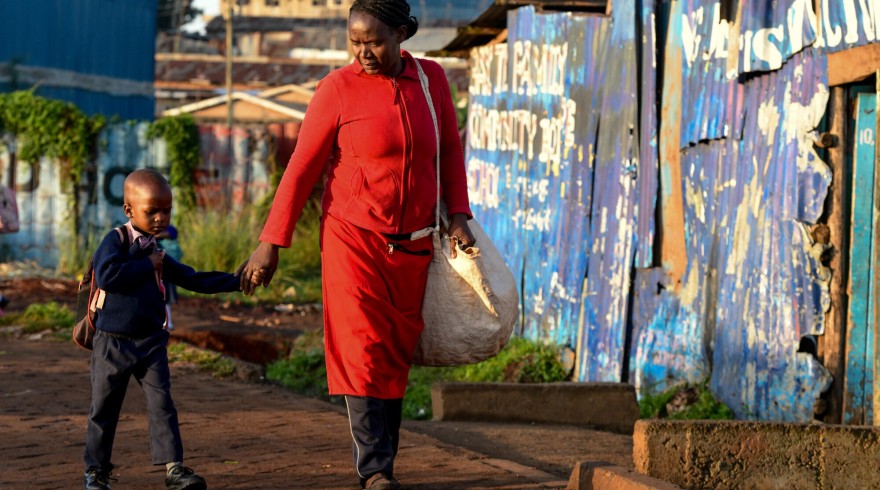
Fridah lives with her children and grandson in a rented corrugated metal shelter. There is no running water, and space is extremely limited.
Like many families in Dagoretti, life is unpredictable. Some days there is enough. Some days there is not. The worry returns every morning.
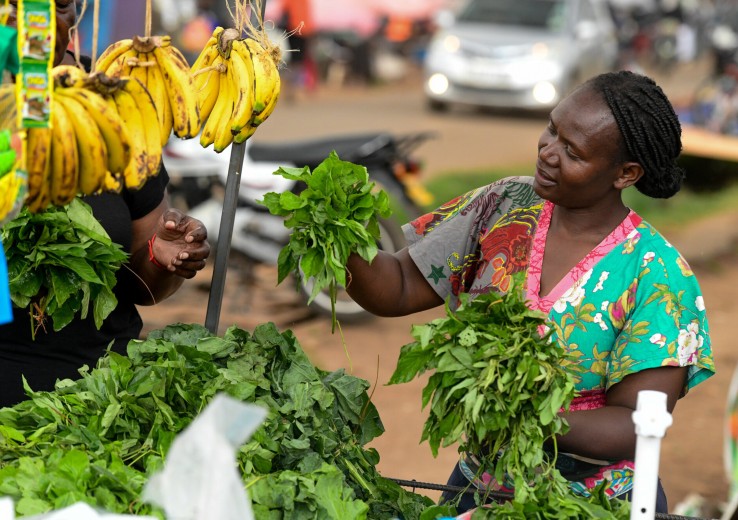
To support her family, Fridah sells vegetables at a market stall. She travels long distances to buy produce, making the journey six days a week. Without refrigeration or storage, everything depends on what she can sell that day.
'Sometimes I don’t know how I’ll buy food. I don’t know how I’ll feed my family.'
A small plot with big impact
Fridah’s situation began to change when she joined Imarisha Kilimo, an urban farming project run by Christian Aid’s partner, Beacon of Hope.
At first, the idea felt impossible: ‘I was wondering, where can someone farm here in Nairobi?’
But through training, tools and seeds, Fridah began to see what was possible — even in the smallest spaces.
‘I discovered I could sow here. Right where I stand,' she shared.
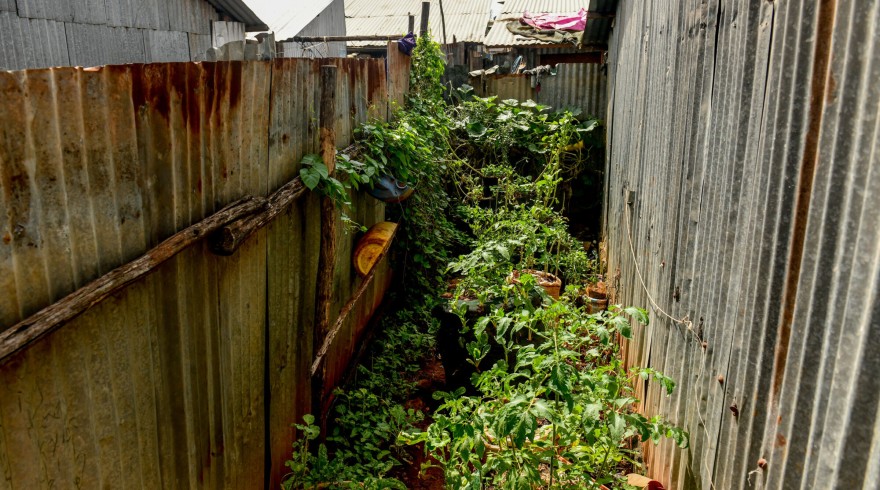
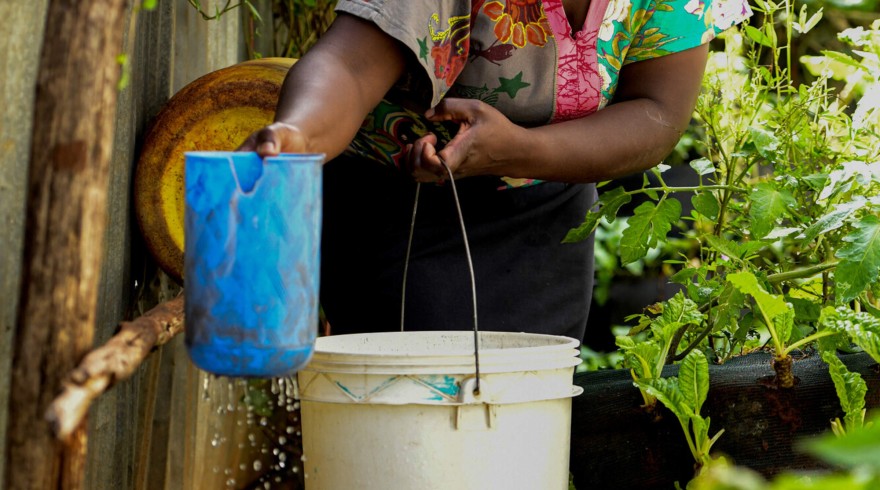
Hidden at the end of a narrow alley, behind a simple gate, Fridah has created something remarkable. In a place where you’d never expect it, vegetables now grow in repurposed containers, and leafy greens climb every available space.
Here, in the heart of the city, Fridah is growing her own food.
Image credits and information
Fridah is already taking steps to overcome poverty - but she doesn't have to do it alone. Your church can stand alongside them, raising funds and hope together.
From uncertainty to possibility
Fridah now grows kale, tomatoes and indigenous vegetables — some to feed her family, and some to sell at her market stall. For the first time, she has a more reliable source of income. As she puts it, ‘Now I can plan. I can buy this; I can buy that. I can help my family.’
Her small urban farm is doing more than putting food on the table. It’s bringing stability and new possibilities. Watching her crops grow brings a deep sense of pride: ‘When what I have planted grows – that is what makes me happy,’ she says. ‘When I get money that I have earned – that is what makes me happy.’
That pride runs through everything she does. ‘I am proud to eat what I’ve produced. This is my own work.’
'Urban farming has changed my life'
Growing confidence and community
Through Beacon of Hope, Fridah has gained more than practical skills. She’s gained confidence.
Before, she struggled to speak to customers. Now, she's building relationships, growing her business and attracting more people to her stall.
She is also part of a wider community of urban farmers, sharing knowledge and building together. In a place where space is limited, opportunity is growing.
Image credits and information
Faith and determination
Despite the challenges she faces, Fridah’s faith remains strong. It gives her the strength to keep going each day, even when life feels uncertain.
'It’s hard, but in God I trust, for the strength to keep going every day.'
Her urban farm is small, but it carries big hopes. Hopes for education, independence and a future beyond daily uncertainty.
This Christian Aid Week, you can make a difference for families like Fridah’s. Help them grow food, protect their children from hunger and nurture hope.